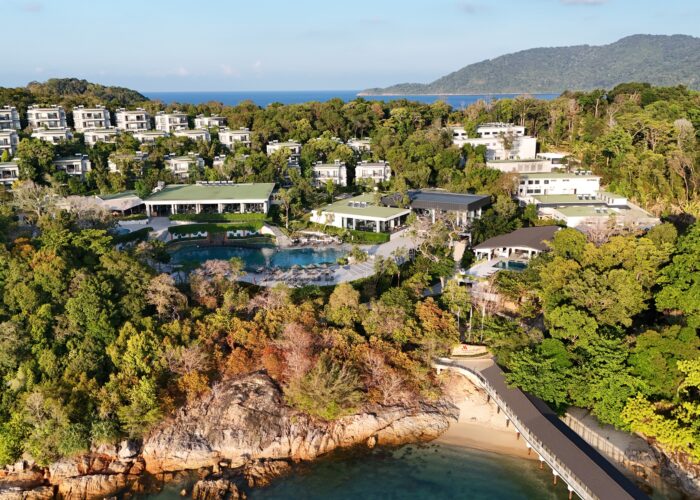
Perhentian Islands are known for clear tropical waters, vibrant coral reefs and an incredible variety of marine life. For divers and snorkellers, exploring these underwater environments is one of the highlights of visiting the islands.
But enjoying the ocean also comes with a responsibility to protect it.
At YBD Dive Centre, we believe that eco friendly diving in the Perhentian Islands is about more than simply appreciating what is beneath the surface. It is about understanding the marine environment, reducing our impact and giving both our team and our guests the knowledge to become better ocean stewards.
From our Coral Discovery Centre and coral propagation activities to responsible diving practices and our participation in the Green Fins programme, conservation is an important part of the YBD experience.
In this article, we take a closer look at what that means in practice.
What Does Sustainable Diving Actually Mean?
Sustainable diving starts with a simple idea: enjoying the underwater world without unnecessarily damaging it.
A coral reef can look strong and resilient, but many reef organisms are delicate. A diver’s fin, unsecured piece of equipment or accidental contact with coral can cause damage that may take a long time to recover.
That is why responsible diving begins with the basics.
Good buoyancy and proper trim help divers maintain control in the water and reduce accidental contact with the reef. Securing gauges, hoses and other equipment helps prevent them from dragging across the environment.
Experienced divers also understand the importance of giving marine life space. Observing animals without touching, chasing or disturbing them allows us to enjoy natural behaviour while minimising unnecessary stress.
At YBD Dive Centre, these principles are part of the diving experience.
When you join our fun dives in the Perhentian Islands, we encourage divers to continue developing their buoyancy, trim and awareness while exploring the local dive sites.
Sustainable diving is not about being perfect. It is about making better choices every time we enter the water.
What does Green Fins Gold Member Mean?
One of the ways YBD Dive Centre puts responsible diving into practice is through our participation in the Green Fins programme.
Green Fins is an initiative that works with marine tourism operators to reduce the environmental impact of diving and snorkelling activities. Certified members receive environmental assessments and training and work towards improving their operational practices.
YBD Dive Centre is currently listed by Green Fins as a certified Gold Member in Pulau Perhentian, Malaysia.
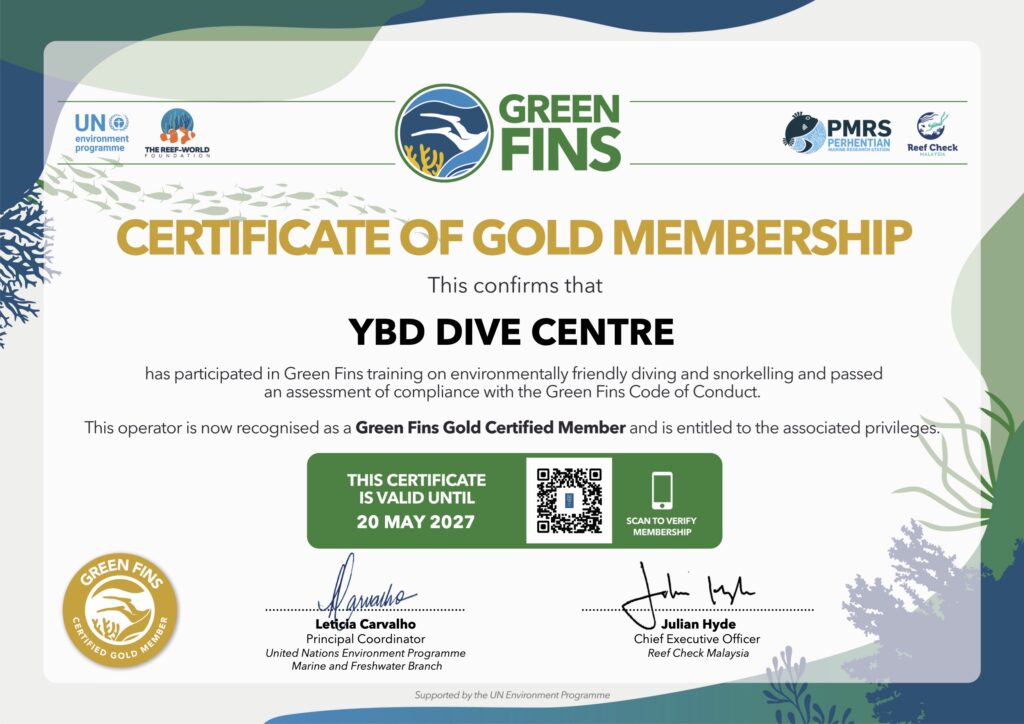
Green Fins Certified Members are assessed according to their environmental practices. Under the current Green Fins system, certified operators are classified as Gold, Silver or Bronze based on their assessment score. Gold certification is awarded to certified members scoring 50 or less. What Is Green Fins Certified Membership?
For us, being part of Green Fins is not simply about displaying a logo.
It is about looking at the way a dive centre operates and identifying practical ways to reduce environmental impact.
This includes the way staff are trained, how diving activities are conducted and how environmental considerations can become part of everyday operations.
Green Fins also provides members with environmental action plans, training and access to practical solutions developed through the wider Green Fins network. Green Fins Membership Benefits
The goal is continuous improvement.
YBD Dive Centre as a PADI Eco Center
YBD Dive Centre is also recognised as a PADI Eco Center, a designation created by PADI to recognise dive centres, resorts and liveaboards that demonstrate a strong commitment to conservation and sustainability within the diving industry.
Our Green Fins Gold status forms an important part of this recognition. PADI Eco Centers must be active Green Fins members and demonstrate a high level of environmental performance, while also participating in PADI AWARE’s Adopt the Blue programme. Together, these requirements provide a framework for integrating conservation into the way a dive operation works. PADI Eco Center
What Does Being a PADI Eco Center Mean?
For us, being a PADI Eco Center is not simply a badge on our website or a logo on the wall.
It represents an ongoing commitment to making conservation part of our everyday operations.
PADI Eco Centers are expected to demonstrate environmental best practices, educate their teams, reduce the environmental footprint of their operations and create opportunities for people to engage with marine conservation.
Through the combination of Green Fins and PADI AWARE’s Adopt the Blue programme, the focus extends beyond individual dives. It encourages dive operators to look at how they operate, how they educate divers and how they can contribute to the protection of marine ecosystems.
For our guests, this means that conservation is not something separate from the YBD experience. It is part of the way we approach diving, education and our relationship with the marine environment.
More Than a Badge
We believe that an eco designation should represent action rather than simply a label.
At YBD, this means continuing to develop our conservation activities, provide opportunities for marine education and look for practical ways to reduce our environmental impact.
Our Coral Discovery Centre, coral propagation activities, coral planting experiences and other conservation initiatives are all part of this wider approach.
Being a PADI Eco Center also means that there is always more to do.
Conservation is an ongoing process. As our understanding of the marine environment develops, so does the way we operate.
For us, the goal is simple: to create exceptional diving experiences while continuing to contribute positively to the marine environment that makes the Perhentian Islands so special.
Dive With a Purpose
The beauty of the Perhentian Islands is something worth experiencing, but it is also something worth protecting.
Whether you are joining your first scuba dive, working towards your next PADI certification, exploring the reefs on a fun dive or taking part in a conservation experience, there are simple ways every guest can make a positive difference.
At YBD Dive Centre, we believe that the best diving experiences are about more than what you see underwater. They are about understanding the environment, respecting marine life and helping to protect the ocean for the divers who come after us.
Explore the Perhentian Islands with us and discover how diving can be part of the conservation story.
Explore Diving in the Perhentian Islands
Frequently Asked Questions (FAQ)
Eco friendly diving means conducting diving activities in ways that reduce unnecessary environmental impact. This can include good buoyancy, avoiding contact with coral, keeping equipment secured, respecting marine life, reducing waste and supporting marine conservation.
Green Fins is a global initiative that works with dive centres, snorkelling centres and liveaboard operators to reduce the environmental impact of marine tourism through practical guidelines, assessments, training and continuous improvement.
Green Fins Certified Members are assessed according to their environmental practices and classified as Gold, Silver or Bronze based on their assessment score. Under the current system, Certified Gold Members score 50 or less. YBD Dive Centre is currently listed as a certified Gold Member in Pulau Perhentian. [EXTERNAL LINK: Green Fins Malaysia Member Directory]
Coral propagation is a conservation technique involving the growth and care of coral fragments. It can form part of wider coral restoration and conservation efforts when carried out appropriately.
Yes. At YBD Dive Centre, guests can learn about coral conservation through experiences such as the Coral Propagation Workshop and Coral Planting activities. [INTERNAL LINK: Coral Conservation Experiences]
Divers can help by maintaining good buoyancy and trim, keeping equipment secured, avoiding contact with coral, giving marine animals space and following responsible diving practices.


Pictures credit: Bridget Glynn